Health and Safety Policy — Commercial Waste Blackwall
This policy sets out the commitment of Commercial Waste Blackwall and affiliated teams to provide a safe working environment for employees, contractors and members of the public affected by our commercial rubbish and waste collection services. It applies to all activity related to the storage, collection, transport and disposal of commercial refuse in our service area. The objective is to reduce risk through consistent controls, clear responsibilities and ongoing review. Safety is a central business priority and all staff must contribute to its delivery.
 The policy is intended to complement statutory obligations and industry best practice without replicating legal detail. It should be read alongside specific operational procedures, risk assessments and vehicle safety protocols. The policy emphasises that prevention of harm takes precedence over convenience or speed of work, and that every member of staff has the authority to stop unsafe work until it has been made safe.
Responsibilities and Management Commitment
Senior management accepts overall responsibility for health and safety performance. Managers and supervisors are accountable for ensuring that tasks are planned and executed safely. Employees and operatives are responsible for following instructions, using provided equipment correctly and reporting hazards or incidents promptly. All levels of the organisation will receive leadership and support to maintain compliance and continuously improve standards.
Risk Assessment and Operational Controls
Our approach to risk management includes regular, documented risk assessments for routine and non-routine activities involving commercial waste transfer and rubbish collection. Controls will be proportionate to identified risks and may include:- Site segregation of waste streams to limit cross-contamination and exposure;
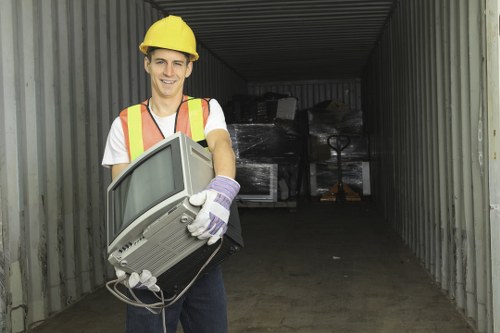
- Use of suitable personal protective equipment (PPE) and provision of training on its correct use;
- Safe systems of work for lifting, loading and unloading, and for operating plant and vehicles;
- Procedures for handling hazardous or non-conforming loads with immediate isolation and escalation.
Training, Competence and Communication
Training and competence are essential elements of this policy. Induction, task-specific instruction and refresher training will be provided to ensure staff understand hazards associated with commercial rubbish removal and waste management. Records of training are maintained and assessed for effectiveness.
Communication channels will include toolbox talks, written procedures, on-board vehicle briefings and digital notices. Employees are encouraged to raise concerns and suggest improvements. Clear, timely communication reduces misunderstandings and prevents incidents.
Equipment, Vehicles and PPE
All vehicles, containers and handling equipment used for commercial waste services shall be maintained under a planned maintenance regime. Operators must complete pre-use checks and report defects immediately. PPE standards are defined and supplied to staff free of charge; use of PPE is mandatory where risk assessments indicate necessity. Failure to use issued PPE may result in disciplinary action where unsafe behaviour is confirmed.Handling of Hazardous and Special Waste
Some collections may contain hazardous materials or special wastes that require segregation, specialist containment and authorised transfer to licensed facilities. Staff will be trained to identify likely hazardous items and follow the incident escalation procedure. Waste that cannot be accepted will be documented and managed in accordance with applicable waste regulations and our internal policies.
 Site and Third-Party Coordination
We work with premises managers, contractors and third-party operators to ensure safe interfaces during collections. Before work begins, responsibilities for traffic management, site access and emergency arrangements must be clarified. Subcontractors are required to demonstrate equivalent health and safety standards and will be monitored through audits and performance reviews.

Incident Reporting, Investigation and Continuous Improvement
All accidents, near misses and dangerous occurrences must be reported without delay using the company incident reporting system. Incidents will be investigated to identify root causes and to implement corrective actions to prevent recurrence. Lessons learned will be shared across the organisation and incorporated into training and procedures.
Performance is monitored through workplace inspections, audits and key performance indicators related to injury rates, vehicle incidents and compliance with safe systems of work. Regular reviews of this policy will take place to reflect changes in operations, regulations and industry practice. Continuous improvement is maintained through management review and employee engagement.
In summary, our health and safety policy for commercial waste operations commits to a proactive, risk-based approach to protect people, preserve the environment and support reliable rubbish collection services. By following defined controls, maintaining competence and collaborating with partners, we will manage hazards effectively and deliver safe, professional waste services across our operational area.
