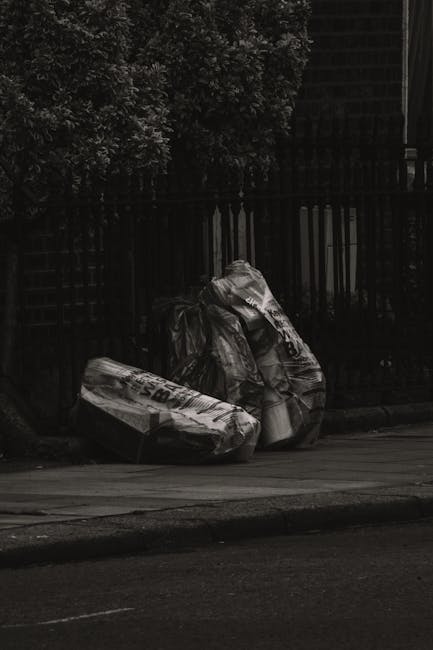
Avoid common mistakes when booking rubbish removal in Blackwall
Booking rubbish removal sounds simple until it isn't. One minute you're clearing a flat after a move, the next you're staring at broken furniture, builder's rubble, a half-full loft, and a quote that suddenly feels a bit less straightforward. If you want to avoid common mistakes when booking rubbish removal in Blackwall, the trick is to slow down just enough to ask the right questions before you commit.
That matters in Blackwall because jobs here can be tight on access, time, parking, lift use, and building rules. A rushed booking can lead to hidden extras, the wrong vehicle, a no-show slot, or waste being handled badly. None of that is fun. The good news? A little preparation goes a long way, and you do not need to become an expert overnight.
This guide walks through the practical checks, the usual traps, and the questions worth asking so you can book with confidence. A bit boring perhaps, but very useful. And honestly, that is what you want when there's a pile of stuff in the hallway.
Table of Contents
- Why it matters
- How rubbish removal booking works
- Key benefits and practical advantages
- Who this is for and when it makes sense
- Step-by-step guidance
- Expert tips for better results
- Common mistakes to avoid
- Tools, resources and recommendations
- Law, compliance, standards and best practice
- Options, methods, and comparison table
- Case study or real-world example
- Practical checklist
- Conclusion
- Frequently asked questions
Why Avoid common mistakes when booking rubbish removal in Blackwall Matters
Rubbish removal is one of those services where the value is not just in "taking things away". It is in making the whole job easier, safer, and less disruptive. If you choose badly, you can end up paying more, waiting longer, or dealing with avoidable stress on the day.
In Blackwall, that can be especially noticeable. Access can be awkward in some properties, storage spaces can be tight, and many people are arranging clearances around work, lettings, renovations, or moving dates. If a provider underestimates the amount of waste, brings the wrong size vehicle, or doesn't explain what can and cannot be taken, the whole thing slows down.
There's also the compliance side. Waste should be handled responsibly, and if certain materials are mixed in without proper arrangements, that can create problems for you as well as the operator. The aim is not just to empty a space; it is to do it in a way that leaves you properly covered.
Expert summary: The best rubbish removal booking is rarely the cheapest on paper. It is the one that gives you a clear price, a realistic time slot, sensible access planning, and a provider that explains how your waste will be handled.
How Avoid common mistakes when booking rubbish removal in Blackwall Works
Most rubbish removal bookings follow a similar pattern. You describe what needs clearing, the provider estimates the load or scope, you get a quote, and then the collection is scheduled. Simple in theory. In practice, the details matter a great deal.
Some jobs are priced by volume, some by item type, and some by the time or labour needed. A small pile of bagged waste is very different from a loft clearance, a garage clear-out, or mixed builder's waste. If you have heavier items, awkward access, or restricted parking, that can change the plan too.
Many good providers will ask for photos, a list of items, or a rough description of where everything is located. That is not fussiness. It is how they avoid sending too small a team or the wrong vehicle. A proper quote should also make clear what is included: labour, loading, disposal, and any specific item restrictions.
If you are comparing options, take a look at general waste removal information, then check whether your job fits a more specific clearance type such as house clearance, office clearance, or builders waste clearance. Matching the service to the job is one of the easiest ways to avoid surprises.
Key Benefits and Practical Advantages
Booking rubbish removal properly saves more than time. It can protect your budget, reduce disruption, and prevent a very ordinary job from becoming a half-day headache.
- More accurate pricing: If the provider knows what they're dealing with, the quote is less likely to shift later.
- Better scheduling: A well-planned booking means fewer delays on the day and less waiting around with the front door open.
- Safer handling: Heavy, sharp, dusty, or awkward items can be managed properly when they are declared in advance.
- Less back-and-forth: Clear details save you from ten little calls about access, parking, and item types.
- Reduced stress: You know what's happening, when it's happening, and what it will cost.
There is also a practical mental benefit. Let's face it, clutter is tiring. Seeing a room, garage, loft, or office clear out properly gives you a bit of breathing space. That first empty corner is often the moment people realise they should have booked sooner.
If sustainability matters to you, ask how the provider approaches sorting and recycling. A responsible operator should be able to explain their general approach to recycling and sustainability in plain English, not hide behind vague promises.
Who This Is For and When It Makes Sense
This kind of service is useful for a lot more than end-of-tenancy panic. In Blackwall, people book rubbish removal for all sorts of reasons, and each one comes with different risks if the booking is rushed.
You may need it if you are:
- clearing after a move or end of tenancy
- removing old furniture or bulky items
- sorting a loft, garage, garden, or spare room
- managing builder's waste after renovation work
- emptying a flat, office, or commercial unit
- dealing with appliances, mattresses, or other awkward items
For example, a landlord clearing a flat does not need the same service profile as a homeowner getting rid of garden waste after a weekend job. Likewise, an office clearance has different expectations from a single sofa removal. Sounds obvious, but people still book the wrong type of clearance all the time, then wonder why the price or timing does not fit.
If your job is specific, it is usually better to choose the closest dedicated page or service rather than a broad, general assumption. For instance, furniture disposal, appliance removal, or mattress disposal each has its own practical quirks. If you are clearing bigger items, you may find furniture disposal, fridge and appliance removal, and mattress and sofa disposal especially relevant.
Step-by-Step Guidance
If you want a simple way to book without mistakes, follow the process below. It is not glamorous, but it works.
- List everything that needs removing. Be honest. Include bulky pieces, mixed waste, and anything awkwardly stored in cupboards, sheds, lofts, or under stairs.
- Separate ordinary waste from special items. Some materials need extra care or specific handling. If in doubt, ask before booking.
- Take clear photos. A few photos in daylight are usually better than a long explanation. Clutter loves shadows, oddly enough.
- Check access. Think about stairs, lifts, parking, loading distance, and whether the team will need help moving items from inside the property.
- Ask what the quote includes. Labour, disposal, recycling, VAT if applicable, and any extra charges should be clear before you agree.
- Confirm timing. Make sure the collection fits your move, your builders, your landlord, or your business opening hours.
- Read the terms before paying. Small print is annoying, yes, but it can save you from a bigger annoyance later.
If you are not sure how much waste will fit into a collection, it can help to compare the job against guidance such as what can go in a skip. Even if you are not hiring a skip, it gives a useful feel for what usually counts as mixed, bulky, or restricted waste.
Expert Tips for Better Results
A few small decisions can make a big difference on the day. These are the things people often learn after one messy booking. Better to learn them now.
- Be specific about access. "Ground floor with easy access" and "third-floor flat with a narrow stairwell" are two very different jobs.
- Photograph awkward items separately. Especially bulky furniture, appliances, or anything that looks heavier than it is.
- Ask whether loading is included. Some services collect from kerbside only, while others do the lifting for you.
- Keep one clear path. If the team can move safely, the job usually goes faster and feels calmer.
- Group similar waste together. Bagged general waste, wood, furniture, and garden waste are easier to assess when they are not mixed into one mysterious heap.
There is a small but important mindset shift here: you are not just buying removal, you are buying planning. That distinction saves headaches. And, to be fair, it usually saves money too.
If you are dealing with an office, confidential items, or paperwork mixed into the clearance, do not toss everything into the same booking without checking. A service such as confidential shredding may be more appropriate for sensitive documents than a standard clear-out.
Common Mistakes to Avoid
This is the heart of it. Most bad experiences come down to a handful of repeat mistakes. The good news is that they are very avoidable.
1. Booking on price alone
The cheapest quote is not always the best value. If a price looks unusually low, ask what is missing. Is labour included? Is disposal included? Are there charges for heavy items, extra bags, or difficult access? A bargain can become a nuisance very quickly.
2. Underestimating the amount of waste
People often think they have "just a few things". Then the shed comes into the picture. Then the loft. Then the old mattress. If you want the job done in one visit, give a fuller picture from the start.
3. Ignoring restricted or specialist waste
Not everything can go in a standard clearance. Certain items need specific handling, and some loads may require separate arrangements. If your pile includes items like a fridge, chemicals, or damaged electricals, mention them early and check the service scope.
4. Forgetting access and parking
Blackwall access can be straightforward in some places and awkward in others. If there is no easy parking, a narrow entrance, or a lift booking requirement, say so. It sounds minor until a collection team arrives and can't unload efficiently.
5. Not reading the terms
No one enjoys terms and conditions, but they often explain cancellation, liability, payment timing, and what happens if the job changes on arrival. That matters more than people think. If you are checking a provider's policies, their terms and conditions and payment and security pages are worth a quick read.
6. Leaving all sorting until collection day
If the team has to wait while you decide what stays and what goes, the job can run over. It also raises the chance of items being missed or misquoted.
7. Assuming every provider handles every waste type
Some do not. Some specialise. Some are better suited to homes, others to commercial sites, and others to specific bulky items. Check first, then book. Simple.
Tools, Resources and Recommendations
You do not need a complicated system. Just a few simple tools and habits.
- Phone camera: Use it to photograph all waste from different angles.
- Notes app: Write down item counts, room locations, and any access restrictions.
- Measuring tape: Handy for big furniture, appliance gaps, and loft access.
- Photos at the entrance route: Very useful if the job involves stairs, narrow halls, or a shared entrance.
It also helps to review useful pages before booking. If you are dealing with a move, a full property clear-out, or a mixed household load, start with home clearance or flat clearance. If the job is more work-focused, business waste removal or office clearance may be a better fit.
For specific items, these pages can also help you sense what kind of service you really need: garage clearance, loft clearance, garden clearance, and builders waste clearance.
Law, Compliance, Standards, or Best Practice
Waste disposal in the UK is not something you want to treat casually. Without getting overly legal about it, there are a few practical standards that matter to customers.
First, waste should be collected and handled responsibly. A professional operator should be clear about how waste is transported and processed, and they should not encourage you to mix in restricted materials without proper arrangements. If a provider is vague about this, that is a red flag, plain and simple.
Second, if you are disposing of items with potential health, safety, or environmental risks, these should be declared upfront. This may include certain appliances, sharp materials, heavy builder's waste, or anything you suspect could be hazardous. A good provider will tell you what they can take and what needs separate handling. If you need specialist guidance, hazardous waste disposal is the safer place to start.
Third, businesses and landlords should keep their own records sensible and organised. That is not about bureaucracy for its own sake; it is about being able to show what was removed, when, and by whom. If you are clearing a commercial space, the health and safety policy and insurance and safety pages can give you a better idea of what a careful provider thinks about.
Best practice, in simple terms, means this: tell the truth about the load, ask how it will be handled, and confirm the price before anyone turns up with a van. Nothing fancy. Just solid housekeeping.
Options, Methods, and Comparison Table
There are usually three ways people deal with waste. The right one depends on the amount, the item type, and how much lifting you want to do yourself.
| Option | Best for | Pros | Watch out for |
|---|---|---|---|
| Professional rubbish removal | Mixed loads, bulky items, quick clearances | Convenient, hands-off, usually faster | Quote accuracy depends on good information |
| Skip hire | Longer projects, ongoing DIY or renovation work | Handy if waste will build up over days | You handle loading, permits/access can matter |
| Self-haul to a facility | Small amounts, those with transport and time | Can be economical for very small jobs | Time, vehicle size, and loading effort fall on you |
For many Blackwall residents and businesses, professional rubbish removal is the cleanest fit when time matters or access is awkward. Skip hire can make sense for ongoing work, but if you are trying to clear a flat, office, or garage quickly, a loading service is often easier. And self-hauling? Fine for the right person, but let's not pretend it's everyone's ideal Saturday.
Case Study or Real-World Example
Here's a realistic example. A couple in Blackwall were moving out of a flat and thought they only needed a small collection. Their first enquiry was vague: "a few bits of furniture and some rubbish."
When they took a closer look, the list had grown into a sofa, a broken wardrobe, two mattresses, several bags of mixed waste, and a box of old appliances. There was also a lift booking to consider and a narrow loading area outside. If they had booked on the first description, the collection would likely have been under-sized.
Instead, they photographed everything, listed the items properly, and asked about access. They also checked whether larger pieces belonged under furniture disposal or a mattress-specific service. That simple bit of prep meant the provider could plan the right team and time slot. The day ran smoothly. No drama. No awkward "we'll need to come back" conversation.
That is the real lesson: the more accurate your information, the better the result. Sounds almost too basic, but in practice it saves a lot of friction.
Practical Checklist
Use this before you book. If you can tick most of these, you are in good shape.
- Have I listed every item that needs removing?
- Have I checked whether any items need specialist handling?
- Have I taken clear photos from more than one angle?
- Have I thought about access, stairs, lifts, and parking?
- Do I know whether loading is included?
- Have I asked what the quote covers in full?
- Have I checked cancellation terms and payment details?
- Do I understand whether recycling or disposal arrangements are explained?
- Have I matched the service to the job type, not just the price?
- Have I got a sensible time slot for the collection?
If you can answer "yes" to most of those, you are probably booking intelligently rather than just quickly. And that's a very good place to be.
Conclusion
The easiest way to avoid common mistakes when booking rubbish removal in Blackwall is to treat the booking as a short planning task, not a quick guess. Know what you need removed, be honest about access, ask what the quote includes, and choose the right type of service for the job. Do that, and you dramatically reduce the chances of delays, surprises, and unnecessary costs.
It is rarely about finding the fanciest provider. It is about finding the one that communicates clearly and fits the actual job in front of you. That's the bit people remember after the van has gone and the space finally feels usable again.
Get a free quote today and see how much you can save.
And if you're still deciding, take one more look at the details, breathe, and choose the option that feels properly thought through. A tidy space has a way of making the rest of the day feel lighter too.
Frequently Asked Questions
What should I check before booking rubbish removal in Blackwall?
Check the amount of waste, the type of items, access conditions, parking, and what the quote includes. Photos help a lot, especially if the job involves bulky or awkward items.
How do I avoid hidden charges?
Ask whether labour, disposal, and any difficult-access charges are included. A good quote should clearly explain what is covered and what might cost extra.
Is rubbish removal better than skip hire?
It depends on the job. Rubbish removal is often better for one-off clearances, bulky items, and properties where you do not want to do the loading yourself. Skip hire can suit longer projects.
Can I book rubbish removal for a flat in Blackwall?
Yes. Just be clear about stairs, lifts, shared entrances, and parking. Flat clearances can be straightforward, but access details matter more than people expect.
What if I have furniture, appliances, and general waste together?
Tell the provider everything in one go. Mixed loads are common, but they need to know about large items like sofas, fridges, or mattresses so they can plan correctly.
Do I need to separate hazardous waste?
Yes, if there is anything that could be classed as hazardous or restricted. Mention it early and ask for guidance rather than mixing it into a standard load.
How far in advance should I book?
If you have flexibility, book early enough to compare options and check the details. If the job is urgent, still send clear photos and a proper list so the provider can assess it accurately.
What is the biggest mistake people make?
Booking too quickly without explaining the real size or complexity of the job. That is usually where pricing issues and scheduling problems start.
Should I choose the cheapest quote?
Not automatically. Compare what is included, how clear the provider is, and whether the service matches your actual needs. Cheapest is not always best value.
Can rubbish removal teams handle office clearances too?
Yes, many can, but office jobs often need better coordination around access, paperwork, and timing. It is worth checking whether business waste removal or office clearance is the better fit.
What if I am not sure whether an item can be taken?
Ask before booking. It is much easier to clarify in advance than to discover on collection day that an item needs different handling.
How do I know a provider is trustworthy?
Look for clear communication, transparent pricing, sensible policies, and useful service information. Pages like about us and complaints procedure can also tell you how seriously a provider treats customer service.